





Challenges and Solutions to Advance Cervical Screening

Cervical cancer screening remains a critical aspect of women's health, significantly reducing the incidence and mortality associated with cervical cancer across Europe. Currently European screening programmes vary widely based on population specific requirements ranging from cytology-based to HPV-based or co-testing (cytology and HPV testing) programmes.
Join the webinar:
Advancing Cervical Cancer Prevention and Improving Screening Program Effectiveness in Europe
The WHO has called for cervical cancer elimination by 2030. One of the pillars for achieving this is a target of at least 70% of women undergoing high performance cervical cancer screening by age 35 and 45. Europe’s Beating Cancer Plan aligns with the WHO goals. It aims to eliminate cervical cancer by expanding screening (90% of the target population offered by 2025), and improving access and awareness.
It will use initiatives like the EU Cancer Screening Scheme to tackle HPV-related cancers through better data, gender-neutral policies, and addressing inequalities, making elimination achievable through strong implementation.
Automation and Screening Programmes in Europe
Over the past two decades, organised screening programmes in Europe have evolved, with new guidelines and emerging technologies reshaping their landscape. The current European Union guidelines recommend a shift towards HPV primary screening and emphasise population-based, quality-assured programmes. These programmes are essential for reducing cervical cancer burden by ensuring widespread, high-quality screening and follow-up, incorporating new technologies for greater reach and efficiency.
HPV tests have a high sensitivity and negative predictive value for detection of cervical cancer and pre-cancer,1 which gives programmes the ability to offer reassurance to women testing negative for HPV infection. The EU screening guidelines recommend using HPV tests along with cytology-based triage, to manage the high volume of screen-positive results. Because most high-risk HPV infections clear naturally, this approach prevents overtreatment while ensuring that those with persistent, high-grade lesions receive necessary follow-up care.
Choosing an HPV Test
Detection of mRNA allows the identification of active infections, offering a higher positive predictive value for the infections most likely to progress to precancerous lesions. This improves the specificity of screening, reduces unnecessary referrals to colposcopy, and help avoid unnecessary treatment.
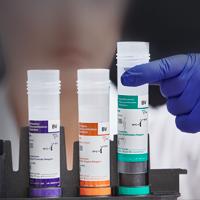
Multiple, robust studies with up to 10 years of follow-up data and real world evidence from screening programmes show that the HPV mRNA assay (Aptima® HPV) has high sensitivity and specificity for the detection of cervical pre-cancer.2–14 It detects mRNA E6/E7 oncogenes from 14 high-risk HPV types offering high sensitivity and superior specificity compared to DNA-based tests. By targeting the mRNA, which is only present during active, transforming infections, the assay provides enhanced identification of high-grade lesions (CIN 2/3+) while minimizing false positives associated with transient infections.
These data support the use of HPV mRNA assays with their high specificity and positive predictive value, which are essential to avoid overcalling, which can lead to unnecessary follow-ups and anxiety for patients.1
Key Challenges for Laboratories
As primary HPV-based cervical screening programs scale up, laboratories face ongoing challenges of implementing new technologies, processing increasing sample volumes and ensuring high quality of program delivery. Transitioning laboratory services to primary HPV testing involves fundamental shifts in operations, personnel, and data management. Successful adaptation relies on high laboratory readiness supported by robust monitoring and quality assurance, to ensure the effectiveness and the safety of the screening program.
Reliable molecular HPV tests backed by scientific rigour, clinical evidence and real-world data, automation for high-throughput adaptability, and standardised workflows are essential to maintain quality and efficiency.
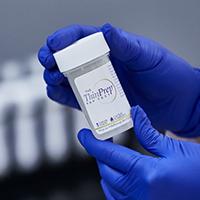
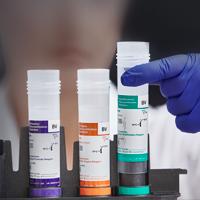
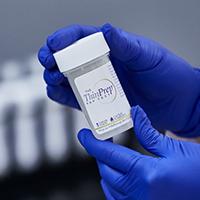
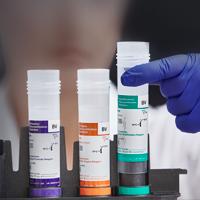
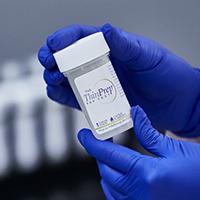
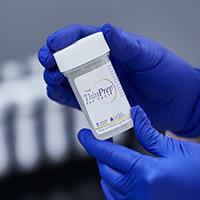
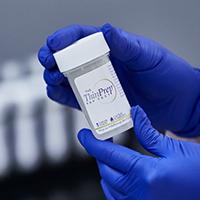
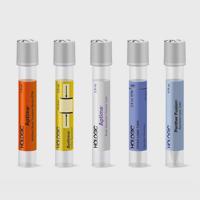
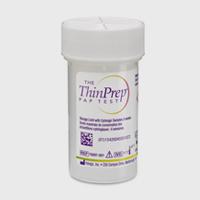
Technology continues to innovate with solutions such as the Genius™ Digital Diagnostics system for AI-guided digital cytology which combines with established solutions such as the market- leading ThinPrep® Pap test, the fully automated Panther® system and the Aptima HPV assay. These systems can process large numbers of samples efficiently and reliably.
Automation with combined scalability not only increases throughput but also allows the use of the same sample for both HPV and cytology testing when required, delivering a seamless, end-to-end solution that improves laboratory productivity and reduces turnaround times. It also supports quality assurance measures, such as built-in process controls and sample traceability, which are essential for large-scale screening programmes.15
The Patient Perspective: Accuracy, Trust, and Screening Uptake
From a patient perspective, the adoption of advanced HPV screening technologies translates into fewer misdiagnoses and unnecessary procedures. High-specificity tests mean an accurate diagnosis, less anxiety, and increased trust in the screening process. When women are confident in the accuracy of their results, they are more likely to participate in regular screening, which is crucial for women’s wellbeing and for achieving optimal public health outcomes.
Conclusion
As European cervical screening programmes continue to evolve, the integration of high-quality molecular testing and laboratory automation will be key to overcoming current and future challenges. The combination of established and innovative new technologies not only improves efficiency, but also strengthens women's trust in the healthcare system, driving higher screening rates and ultimately leading to better health outcomes across the continent.
To learn more, visit our Cervical Health Portfolio page.
For more insight articles, visit the Hologic Innovation Exchange.
2797
Hologic BV, Da Vincilaan 5, 1930 Zaventem, Belgium.
Notified body number wherever applicable
Arbyn M, Simon M, de Sanjosé S, Clarke MA, Poljak M, Rezhake R, et al. Accuracy and effectiveness of HPV mRNA testing in cervical cancer screening: a systematic review and meta-analysis. Lancet Oncol. 2022 July;23(7):950–60.
Cook DA, Smith LW, Law J, Mei W, van Niekerk DJ, Ceballos K, et al. Aptima HPV Assay versus Hybrid Capture® 2 HPV test for primary cervical cancer screening in the HPV FOCAL trial. J Clin Virol Off Publ Pan Am Soc Clin Virol. 2017 Feb;87:23–9.
Iftner T, Neis KJ, Castanon A, Landy R, Holz B, Woll-Herrmann A, et al. Longitudinal Clinical Performance of the RNA-Based Aptima Human Papillomavirus (AHPV) Assay in Comparison to the DNA-Based Hybrid Capture 2 HPV Test in Two Consecutive Screening Rounds with a 6-Year Interval in Germany. J Clin Microbiol. 2019 Jan;57(1):e01177-18.
Strang THR, Gottschlich A, Cook DA, Smith LW, Gondara L, Franco EL, et al. Long-term cervical precancer outcomes after a negative DNA- or RNA-based human papillomavirus test result. Am J Obstet Gynecol. 2021 Nov;225(5):511.e1-511.e7.
Zorzi M, Del Mistro A, Giorgi Rossi P, Laurino L, Battagello J, Lorio M, et al. Risk of CIN2 or more severe lesions after negative HPV-mRNA E6/E7 overexpression assay and after negative HPV-DNA test: Concurrent cohorts with a 5-year follow-up. Int J Cancer. 2020 June 1;146(11):3114–23.
Forslund O, Miriam Elfström K, Lamin H, Dillner J. HPV-mRNA and HPV-DNA detection in samples taken up to seven years before severe dysplasia of cervix uteri. Int J Cancer. 2019 Mar 1;144(5):1073–81.
Reid JL, Wright TC, Stoler MH, Cuzick J, Castle PE, Dockter J, et al. Human papillomavirus oncogenic mRNA testing for cervical cancer screening: baseline and longitudinal results from the CLEAR study. Am J Clin Pathol. 2015 Sept;144(3):473–83.
Giorgi Rossi P, Ronco G, Mancuso P, Carozzi F, Allia E, Bisanzi S, et al. Performance of HPV E6/E7 mRNA assay as primary screening test: Results from the NTCC2 trial. Int J Cancer. 2022 Oct 1;151(7):1047–58.
Ratnam S, Coutlee F, Fontaine D, Bentley J, Escott N, Ghatage P, et al. Aptima HPV E6/E7 mRNA test is as sensitive as Hybrid Capture 2 Assay but more specific at detecting cervical precancer and cancer. J Clin Microbiol. 2011 Feb;49(2):557–64.
Heideman D a. M, Hesselink AT, van Kemenade FJ, Iftner T, Berkhof J, Topal F, et al. The Aptima HPV assay fulfills the cross-sectional clinical and reproducibility criteria of international guidelines for human papillomavirus test requirements for cervical screening. J Clin Microbiol. 2013 Nov;51(11):3653–7.
Iftner T, Becker S, Neis KJ, Castanon A, Iftner A, Holz B, et al. Head-to-Head Comparison of the RNA-Based Aptima Human Papillomavirus (HPV) Assay and the DNA-Based Hybrid Capture 2 HPV Test in a Routine Screening Population of Women Aged 30 to 60 Years in Germany. J Clin Microbiol. 2015 Aug;53(8):2509–16.
Cuzick J, Cadman L, Mesher D, Austin J, Ashdown-Barr L, Ho L, et al. Comparing the performance of six human papillomavirus tests in a screening population. Br J Cancer. 2013 Mar 5;108(4):908–13.
Monsonego J, Hudgens MG, Zerat L, Zerat JC, Syrjänen K, Halfon P, et al. Evaluation of oncogenic human papillomavirus RNA and DNA tests with liquid-based cytology in primary cervical cancer screening: the FASE study. Int J Cancer. 2011 Aug 1;129(3):691–701.
Rebolj M, Cuschieri K, Mathews CS, Pesola F, Denton K, Kitchener H, et al. Extension of cervical screening intervals with primary human papillomavirus testing: observational study of English screening pilot data. BMJ. 2022 May 31;377:e068776.
Filiti G. European Cancer Organisation. 2025 [cited 2025 Dec 3]. Closing the Gaps: A New ECO Report Sheds Light on the Status of HPV Screening Programmes in Europe. Available from: https://www.europeancancer.org/closing-gaps-cervical-cancer.html